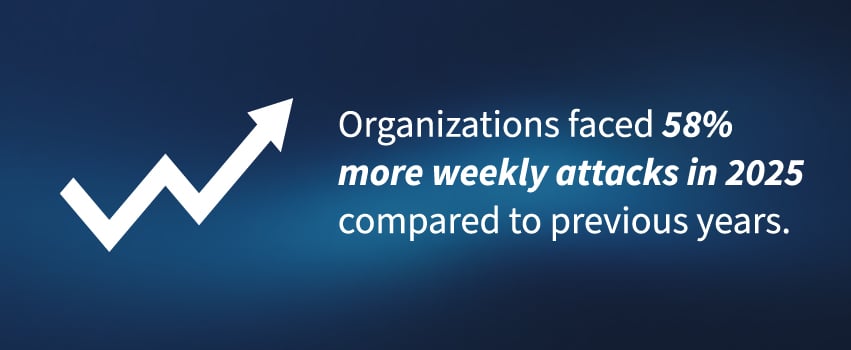
Your network infrastructure is under constant attack. Every day, cybercriminals scan for weaknesses they can exploit to steal data, install malware, or disrupt operations. Organizations faced an average of 58% more weekly attacks in 2025 compared to previous years,1 and the attack surface keeps expanding as businesses add more cloud services, remote endpoints, and connected devices.
Without a clear strategy to fix vulnerabilities before attackers find them, you're playing defense in a game where the other side already knows your weaknesses. Vulnerability management provides a structured approach to stay ahead of these threats by continuously remediating security gaps across your IT environment. Rather than waiting for breaches to happen, vulnerability management helps you find problems first and fix them systematically.
Read on to learn what vulnerability management is, why it matters for your organization, and how to build an effective vulnerability management program that strengthens your security posture.
What Is Vulnerability Management?
Vulnerability management is the process of continuously identifying, prioritizing, and remediating the security weaknesses in your IT infrastructure. Unlike one-time security assessments, vulnerability management is an ongoing program that finds and fixes vulnerabilities before hackers can exploit them.
A vulnerability is any weakness in your systems that could be used to compromise security. These can include:
- Unpatched software
- Misconfigured firewalls
- Weak authentication
- Outdated operating systems
Rather than trying to address all of these issues at once, enterprise vulnerability management helps you focus on fixing the vulnerabilities that would affect your business most if targeted. You can't protect everything, so you protect what matters most.
Why Is Vulnerability Management Important?
Over 60% of data breaches are caused by the failure to apply available security patches.2 These aren't sophisticated zero-day attacks – they're attackers taking advantage of security gaps that organizations already knew about but didn't prioritize fixing.
Without vulnerability management, your security team faces challenges like:
- Blind spots in your attack surface where you don't know what vulnerabilities exist
- Alert fatigue from scanning tools that report thousands of issues without context
- Wasted resources on low-risk vulnerabilities while critical gaps remain open
- Compliance failures when auditors find unpatched systems during assessments
- Increased breach risk as attackers exploit known weaknesses faster than you can patch them
Security vulnerability management gives you visibility and control to understand where your vulnerabilities are, which ones matter most, and how to fix them efficiently. Rather than feeling overwhelmed by the sheer number of issues, you get a clear picture of what needs attention and in what order.
At Aseva, we help organizations implement comprehensive vulnerability management programs that integrate with their existing security infrastructure. Our cybersecurity experts work alongside your IT team to identify gaps, prioritize remediation efforts, and build sustainable processes that reduce risk over time.
The Vulnerability Management Process
IT vulnerability management follows a continuous cycle that helps organizations stay ahead of emerging threats. Here are the key vulnerability management process steps:
1. Asset Discovery and Inventory
You can't protect what you don't know about. The first step is building a complete inventory of all assets in your IT environment, including servers, workstations, network devices, cloud resources, and applications. This inventory should track details like operating systems, installed software, network locations, and business criticality.
Many organizations discover shadow IT during this phase – systems and applications that aren't officially tracked but still process company data. Our network security consultants help businesses gain full visibility across distributed environments to ensure nothing falls through the cracks.
2. Vulnerability Assessment and Scanning
Once you know what assets you have, the next step is identifying vulnerabilities within them. Vulnerability scanners compare your systems against databases of known security issues, checking for:
- Missing security patches and software updates
- Misconfigurations in operating systems and applications
- Weak or default credentials
- Open ports and unnecessary services
- Outdated encryption protocols
- Known software bugs with published exploits
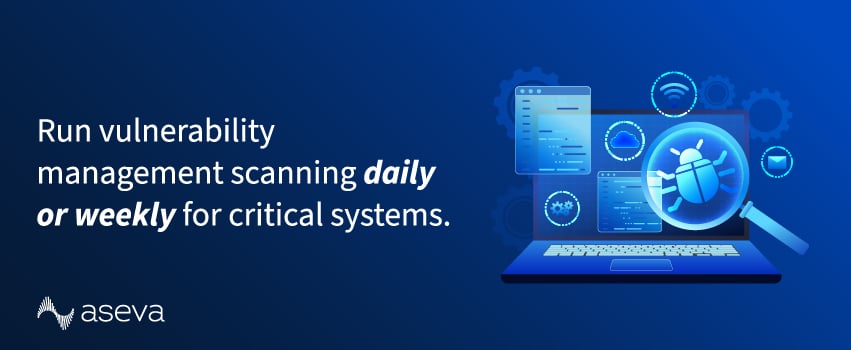
Run threat and vulnerability management scanning regularly – daily or weekly for critical systems, and at minimum monthly for all assets. The frequency depends on your risk tolerance and how quickly your environment changes.
3. Risk Assessment and Prioritization
Not all vulnerabilities deserve equal attention. A critical vulnerability on an internet-facing server poses much higher risk than the same issue on an isolated test system. This step evaluates each vulnerability based on severity scores like CVSS (Common Vulnerability Scoring System) ratings, whether working exploits exist in the wild, and how important the affected system is to business operations.
This analysis helps you focus resources on the vulnerabilities that actually matter to your organization. At Aseva, we help businesses implement risk-based vulnerability management that aligns security efforts with business priorities.
4. Remediation and Mitigation
After prioritizing vulnerabilities, it's time to fix them. Remediation options include:
- Patching software to the latest secure version
- Reconfiguring systems to remove the vulnerability
- Implementing compensating controls like firewall rules when immediate patching isn't possible
- Removing or isolating systems that can't be secured
The vulnerability management best practices we recommend include establishing service level agreements (SLAs) for remediation based on risk. For instance, your most critical vulnerabilities might require fixes within 24-48 hours, while you can wait to address lower-risk issues in the next patch cycle.
5. Verification and Reporting
After remediation, verify that the vulnerability is actually fixed. Rescan affected systems to confirm the issue is resolved and document the remediation for compliance and audit purposes.
Regular reporting keeps stakeholders informed about current vulnerability counts and trends, repeat vulnerabilities that keep appearing, your overall security posture improvements, and other metrics that help demonstrate the value of your vulnerability management program.
What Is a Vulnerability Management Program?
A vulnerability management program is the formalized strategy and tools your organization uses to manage security vulnerabilities. Think of it as the framework that turns vulnerability scanning from a periodic activity into a continuous security practice. Rather than conducting a scan once a year and forgetting about it, a mature program scans continuously and acts on findings.
An effective vulnerability management program should include:
- Defined scope covering all assets in your environment, from on-premises servers to cloud workloads and remote endpoints.
- Regular scanning using automated tools to discover new vulnerabilities as they emerge.
- Risk-based prioritization that considers both vulnerability severity and business impact.
- Clear ownership with assigned responsibilities for remediation across IT and security teams.
- Tracking and metrics to measure progress and demonstrate improvement over time.
- Integrations with patch management, configuration management, and incident response processes.
The goal isn't just to find vulnerabilities – it's to create a systematic approach that reduces your overall attack surface and improves security posture consistently.
Vulnerability Management Best Practices
Building a vulnerability management program takes more than just buying scanning tools. Here are the practices that separate successful programs from checkbox exercises:
Automate Where Possible
Manual vulnerability scanning doesn't scale. Automated scanning ensures consistent coverage and frees your team to focus on analysis and remediation rather than running tools. However, automation works best when combined with expert oversight to reduce false positives and focus on real threats.
Integrate With Other Security Tools
Vulnerability management shouldn't operate in isolation. You can gain better context and streamline remediation workflows by integrating vulnerability management with your SIEM, endpoint protection, and patch management systems.
Establish Clear Ownership
Vulnerability management requires collaboration between security teams who identify issues and IT operations who implement fixes. Define who's responsible for remediation across different systems and establish escalation paths for high-risk vulnerabilities.
Focus on Continuous Improvement
Track metrics over time to measure program effectiveness. Are you reducing time to remediation? Decreasing the total vulnerability count? Catching critical issues faster? Use these insights to refine your processes.
Consider Managed Services
Many organizations struggle to maintain consistent vulnerability management with limited internal resources. A managed security service provider like Aseva can give you access to specialized expertise, advanced tools, and 24/7 monitoring without building everything in-house.
Our Vulnerability Management as a Service (VMaaS) offering provides continuous visibility into your attack surface with expert analysis and remediation guidance tailored to your environment.
Strengthen Your Security Posture With Aseva
Effective vulnerability management requires the right combination of tools, processes, and expertise. You need comprehensive scanning coverage, intelligent prioritization, efficient remediation workflows, and the ability to demonstrate continuous improvement to stakeholders and auditors.
At Aseva, we've helped organizations across the country build vulnerability management programs that actually work. Our approach combines advanced scanning technology with hands-on security expertise to give you continuous visibility into your attack surface without overwhelming your team with noise.
We act as an extension of your IT team, delivering the tools and support you need to identify vulnerabilities, prioritize based on real business risk, and remediate efficiently. Whether you need help building a program from scratch, improving existing processes, or augmenting your team with specialized resources, we're here to help you strengthen your security posture.
Ready to build a vulnerability management program that protects your business from evolving threats? Get started with Aseva today.
Sources: