TL;DR
- A zero-day vulnerability is an unknown software, firmware, or hardware flaw that attackers can exploit before a patch is available, which makes it especially dangerous for businesses.
- Zero-day attacks are hard to detect because traditional tools often rely on known signatures, so organizations need layered security, behavioral monitoring, and strong visibility across systems.
- Reducing zero-day risk depends on practical steps such as patch management, penetration testing, network segmentation, employee awareness, threat intelligence, and close attention to third-party software and vendors.
- If a zero-day affects your organization, you should quickly confirm exposure, apply mitigations, increase monitoring, and patch and validate affected systems as soon as a fix is available.
Cyber threats are evolving faster than ever – and even the best defenses can be caught off guard. Some of the most dangerous attacks happen before software vendors even know a vulnerability exists. These are known as zero-day vulnerabilities, and they represent one of the most urgent challenges for modern cybersecurity teams.
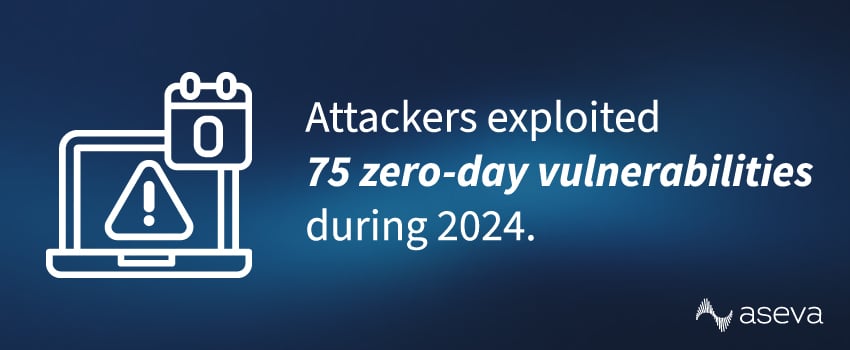
Zero-day exploits have increased by 141% in the last five years,1 with 75 zero-day vulnerabilities actively exploited during 2024 alone.2 Read on to learn why zero-day vulnerabilities matter, how a zero-day attack can occur, and what strategies your organization can use to prevent them.
What Is a Zero-Day Vulnerability?
A zero-day vulnerability is a security flaw in a piece of software, firmware, or hardware that isn’t known to the vendor or the general public. The developer hasn't created a patch or update to fix it yet, so attackers can exploit it without warning. The term "zero-day" refers to the fact that the vendor has had zero days to prepare a fix before an attack begins.
These vulnerabilities can hide in almost anything: operating systems, web browsers, network appliances that protect your infrastructure, or even the IoT devices connected throughout your organization. Once attackers discover one of these flaws, they can use it to access sensitive systems or data before your defenses are even aware of the problem.
Zero-Day Exploit vs. Zero-Day Attack
Although these terms are often used interchangeably, they do not mean the same thing.
What Is a Zero-Day Exploit?
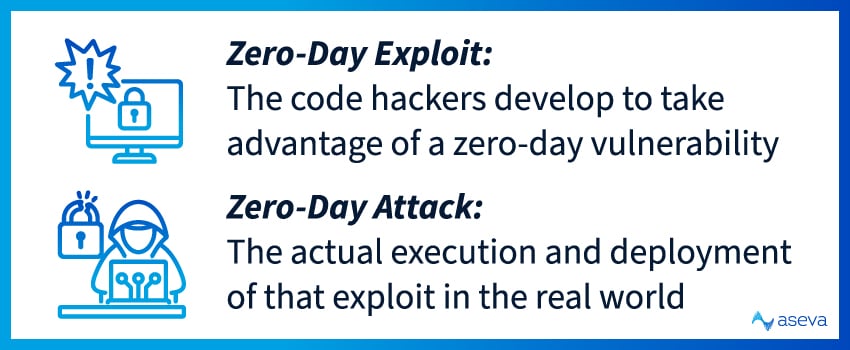
A zero-day exploit is the code or technique attackers create to take advantage of a zero-day vulnerability. In other words, it is the method used to abuse an unknown security flaw before a patch is available.
What Is a Zero-Day Attack?
A zero-day attack is the real-world use of that exploit against a target system, application, or device. It is the moment when attackers actively deploy the exploit to gain access, steal data, disrupt operations, or move deeper into an environment.
For example, if an attacker discovers a flaw in a web browser, the exploit would be the code designed to abuse that weakness. The attack would be the actual use of that code against real users or organizations.
Zero-day exploits are highly valuable in the cybercrime ecosystem and may be sold privately or used by threat groups to target businesses, government agencies, and critical infrastructure.
How Does a Zero-Day Attack Work?
A typical zero-day attack follows a predictable pattern, even if the specifics vary depending on the vulnerability and target.
Discovery
A cybercriminal or security researcher uncovers a previously unknown flaw in a piece of software or device.
Exploit Creation
The attacker develops a payload – a zero-day exploit – to take advantage of that vulnerability.
Attack Execution
The attacker uses the exploit to breach the system and deploy malware or access data and infrastructure.
Vendor Response
Once the business detects and reports the attack, the vendor should begin developing and releasing a patch.
Public Disclosure
After a fix is available, details of the vulnerability are often shared publicly to encourage users to update their systems.
Real-World Examples of Zero-Day Vulnerabilities
Zero-day vulnerabilities have impacted some of the most widely used software in the world. Here are a few notable examples:
- SharePoint Attacks: Hackers exploited a pair of zero‑day vulnerabilities, referred to as “ToolShell,” against on‑prem SharePoint servers in July 2025. Attackers were able to use these flaws to access sensitive data and move laterally in affected environments before patches were available.3
- React2Shell Vulnerability: A zero‑day vulnerability was discovered in React Server Components and confirmed to be exploited by multiple threat actors in December 2025. React2Shell scored at the highest risk level, impacting many web apps built on the React framework.4
- SonicWall Appliances: Also in December 2025, attackers exploited a local privilege escalation zero‑day vulnerability in SonicWall SMA 1000 appliances. This flaw allowed attackers to elevate privileges and access infrastructure remotely before a patch was released.5
These examples show why zero-day protection must be a proactive effort – not a reactive one.
What Are the Dangers of a Zero-Day Vulnerability?
Zero-day attacks are especially difficult to defend against because traditional security tools rely on known threat signatures or past attack patterns. With a brand-new exploit, there’s no preexisting rule or update that can detect it.
Why Zero-Day Attacks Are Hard To Detect
Zero-day attacks are difficult to detect because they take advantage of flaws defenders have not seen before. Traditional security tools often rely on known signatures, established indicators, or previously observed attack behavior. When the vulnerability is new, there may be no reliable signature yet, no mature detection rule, and very little public intelligence to guide defenders. That gap is one reason zero-day exploitation remains such a valuable path for attackers, especially against high-value enterprise technologies and internet-facing systems.
Unknown Exploits Create Blind Spots
Even strong security programs can face a period of uncertainty when a zero-day is first used in the wild. An exploit may look like normal system activity at first, use legitimate tools after access is gained, or avoid triggering older rules built for known malware families. CISA’s and NIST’s guidance on monitoring and anomaly detection reflects this reality: defenders cannot depend only on static indicators when facing novel threats. They also need visibility into system behavior, user activity, network changes, and suspicious deviations from a known baseline.
Detection Improves With Behavior-Based Security
That is why many organizations strengthen zero-day defense with tools and practices built around behavior, not just signatures. Endpoint detection and response, centralized logging, anomaly detection, threat hunting, and zero trust security models can help teams identify suspicious activity even when the exact exploit is not yet fully understood. These approaches do not eliminate zero-day risk, but they can reduce dwell time, contain attacker movement faster, and improve your odds of detecting exploitation before it turns into a larger incident.
The result is a blind spot in your defense posture that can be exploited even if your software and antivirus appear fully updated. That’s why network security management, firewall configuration best practices, and threat intelligence are all essential parts of a zero-day prevention strategy.
Zero-Day Risk in Third-Party Software, Vendors, and the Supply Chain
Zero-day risk does not come only from software your internal team installs and manages directly. It can also enter your environment through cloud platforms, security appliances, managed tools, open-source components, vendor integrations, and other third-party technologies your business depends on every day. That means an organization can be exposed even when the vulnerable product is operated by a supplier, embedded inside another platform, or sitting outside the systems most teams check first. NIST’s supply-chain guidance treats cybersecurity risk as something that can arise both within the supply chain and through it, which is why third-party visibility matters so much in vulnerability response.
Why Third-Party Exposure Is Easy To Miss
Third-party zero-day exposure is often harder to spot because the affected technology may not appear in a standard asset list or patching workflow. A business might rely on a managed security tool, a hosted application, a connected appliance, or a software dependency without fully understanding which components sit behind it. When a new zero-day is disclosed, that lack of visibility can delay scoping, mitigation, and communication at the exact moment speed matters most. NIST recommends due diligence, vulnerability disclosure expectations, and clear supplier communication as part of cybersecurity supply chain risk management for exactly this reason.
How To Reduce Third-Party Zero-Day Exposure
Reducing this risk starts with knowing which vendors, service providers, and critical platforms have access to your data, systems, or network paths. From there, organizations should maintain an up-to-date inventory of critical suppliers, define how vendors must communicate security incidents and vulnerabilities, and understand what mitigations or service-level commitments are in place when a serious flaw emerges. In practice, this makes it easier to answer urgent questions quickly: Are we affected, how exposed are we, what is the workaround, and who is responsible for taking action? Those are the kinds of questions that become far more manageable when third-party security expectations are established before an incident happens.
7 Ways To Prevent Zero-Day Attacks
While it’s impossible to eliminate zero-day risk completely, there are proven strategies to reduce your exposure and respond faster when new threats appear.
1. Implement Layered Security
A single tool can’t stop every threat. Use multiple layers of defense – including next-generation firewalls, endpoint detection and response (EDR), and SIEM services – to detect anomalies across your environment.
At Aseva, we design layered cybersecurity frameworks that combine network, cloud, and endpoint protection under one unified system.
2. Keep Software and Firmware Updated
Updates won't protect you against zero-day flaws that haven't been discovered yet, but they eliminate the large category of vulnerabilities that attackers actively exploit because they're easy targets.
Establish a strict patch management policy in your organization and prioritize critical updates as soon as your vendor releases them.
3. Use Threat Intelligence and Behavioral Analytics
AI-powered security tools can identify suspicious behavior even without knowing an attack’s specific signature. Behavioral detection systems monitor traffic patterns flowing through your network, user activity on systems, and logs from your endpoints to spot potential zero-day exploits in real time.
4. Conduct Regular Penetration Testing
Simulated attacks can reveal vulnerabilities before attackers find them. Penetration testing, combined with continuous vulnerability management, helps identify and remediate weaknesses early.
Aseva’s vulnerability management as a service (VMaaS) and penetration testing solutions provide this proactive visibility – helping you discover hidden flaws before they become entry points.
5. Enforce Network Segmentation
Separating your critical systems from less sensitive parts of your network helps limit the impact of a breach. Even if an attacker accesses your network via a zero-day exploit, segmentation prevents them from moving freely throughout your entire infrastructure.
6. Train Employees on Cyber Awareness
Phishing is still one of the most common ways attackers deliver zero-day payloads to organizations. Providing regular security awareness training to your employees can help them recognize suspicious links, dangerous attachments, and behavior that doesn't seem right.
7. Partner With a Managed Security Provider
Preventing zero-day vulnerabilities requires around-the-clock monitoring, rapid patch deployment, and advanced threat intelligence. For most businesses, this level of oversight is difficult to maintain in-house.
That’s why many organizations partner with a managed security provider like Aseva. Our team detects and blocks threats using Fortinet’s advanced security platforms – supported by human expertise and strategic guidance.
What To Do If a Zero-Day Vulnerability Affects Your Organization
When a zero-day vulnerability is disclosed, speed matters, but so does discipline. The first step is to confirm whether the affected software, firmware, device, or service actually exists in your environment, including older versions, internet-facing systems, and tools managed by third parties. From there, your team should identify which assets are exposed, determine whether any signs of compromise already exist, and prioritize the systems that create the highest business or security risk if they are affected. CISA’s vulnerability-response guidance emphasizes identifying impacted assets, tracking mitigations, and moving quickly from validation to containment and remediation.
Apply Mitigations Before a Patch Is Ready
A zero-day does not always come with an immediate fix. In many cases, vendors first release temporary guidance such as disabling a vulnerable feature, restricting access, isolating management interfaces, tightening firewall rules, or increasing monitoring around the affected asset. Those interim steps can reduce exposure while the vendor develops and publishes a patch. This is especially important for internet-facing applications, remote-access tools, and security appliances, which continue to be common targets in real-world exploitation.
Monitor Closely for Suspicious Activity
Because zero-day activity may not match known signatures, organizations should increase logging, alerting, and threat hunting as soon as a relevant issue is disclosed. Security teams should watch for unusual authentication events, unexplained privilege changes, suspicious outbound traffic, unexpected process behavior, and evidence of lateral movement. CISA and NIST both stress the importance of ongoing monitoring and anomaly detection during active response, especially when defenders are dealing with newly emerging threats and incomplete indicators.
Patch, Validate & Document the Response
Once a fix becomes available, patching should be treated as only part of the response. Teams should verify that the patch was applied successfully, confirm that related workarounds can be safely rolled back, and continue monitoring to make sure the vulnerability was not exploited before remediation. It is also important to document what systems were affected, what actions were taken, and whether any process improvements are needed for future incidents. A mature response to zero-day risk is not just about restoring systems quickly. It is about reducing uncertainty, limiting business impact, and improving resilience the next time a critical flaw appears.
Stay Ahead of Zero-Day Threats With Aseva
Zero-day vulnerabilities are a serious risk, but they don’t have to leave your organization exposed. With the right mix of technology and support, you can limit their impact and detect them sooner.
At Aseva, we know that zero-day attacks can strike even the most secure networks. That’s why we combine cybersecurity solutions like proactive monitoring, managed threat detection, and incident response to keep our clients protected at all times. We stay ahead of evolving attacks so you don't have to.
Ready to reduce your exposure to zero-day exploits? Get started with Aseva today.
Zero-Day Vulnerability FAQs
What is a zero-day vulnerability?
A zero-day vulnerability is a software, firmware, or hardware flaw that is unknown to the vendor or not yet patched when attackers begin exploiting it. Because no fix is ready at the start, organizations may have little warning before the threat is used in real-world attacks.
What is the difference between a zero-day vulnerability, exploit, and attack?
The vulnerability is the flaw itself. The exploit is the code or technique used to take advantage of that flaw. The attack is the actual use of the exploit against a target system, application, or device. These terms are closely related, but they are not identical.
Why are zero-day attacks so dangerous?
Zero-day attacks are dangerous because defenders may not have a patch, signature, or mature detection logic available when exploitation begins. That gives attackers a window to gain access, escalate privileges, move laterally, steal data, or deploy additional payloads before the issue is fully understood.
Can antivirus stop a zero-day attack?
Sometimes, but not reliably on its own. Signature-based tools can miss novel exploits, which is why organizations often combine endpoint protection with behavior-based detection, logging, segmentation, threat intelligence, and rapid response processes.
How do attackers usually exploit zero-day vulnerabilities?
Attackers may use zero-days through phishing, malicious websites, internet-facing applications, VPNs, browsers, email clients, security appliances, or other exposed software and devices. Recent reporting has shown continued exploitation of enterprise and networking technologies, not just end-user platforms.
What should you do first if a zero-day affects your environment?
First, confirm whether the affected product and version are present in your environment. Then identify exposed assets, apply available mitigations or vendor workarounds, increase monitoring, and prepare to patch as soon as a fix becomes available.
Can fully patched systems still be affected by a zero-day?
Yes. A fully patched system can still be vulnerable if the flaw was unknown at the time and no vendor fix existed yet. Patching remains essential, but zero-day defense also depends on layered controls, monitoring, segmentation, and fast response.
Do zero-day vulnerabilities only affect software your team manages directly?
No. They can also affect third-party software, cloud services, appliances, open-source dependencies, managed tools, and other vendor technologies connected to your environment. That is why third-party visibility and supplier communication are important parts of cyber risk management.
How can a managed security provider help reduce zero-day risk?
A managed security provider can help by monitoring for suspicious behavior, applying threat intelligence, validating exposure, supporting mitigation steps, improving detection coverage, and accelerating response when a serious vulnerability is disclosed or exploited. These capabilities are especially valuable for organizations that cannot maintain continuous in-house monitoring.
Sources:
- https://zeronetworks.com/blog/what-is-a-zero-day-attack-everything-you-need-to-know
- https://thehackernews.com/2025/04/google-reports-75-zero-days-exploited.html
- https://www.washingtonpost.com/technology/2025/07/20/microsoft-sharepoint-hack
- https://cloud.google.com/blog/topics/threat-intelligence/threat-actors-exploit-react2shell-cve-2025-55182
- https://www.helpnetsecurity.com/2025/12/17/sonicwall-cve-2025-40602