
With business growth comes more connected systems, cloud services, and security challenges. Organizations have faced 58% more weekly attacks on average in 2025,1 and without a clear strategy to manage your network security needs in one place, you might find yourself with gaps in your defenses – despite investing in the latest firewalls and security tools.
Network security management provides a structured, proactive way to monitor, control, and optimize every layer of your defenses. Read on to learn how it works, why it’s important, and what you can do to strengthen your network security management strategy.
Key Takeaways
- Network security management is the process of centrally monitoring, controlling, and improving the tools, policies, and workflows that protect your network across on-prem, cloud, and hybrid environments.
- A strong program combines centralized visibility, consistent policy enforcement, threat detection and response, compliance reporting, and regular reviews to reduce blind spots and improve resilience.
- Common challenges include fragmented visibility, policy drift, alert overload, and the difficulty of securing modern hybrid environments without disrupting day-to-day operations.
- To strengthen your approach, build a clear management plan, review vulnerabilities and policies regularly, and unify security oversight so risks can be identified and addressed faster.
What Is Network Security Management?
Network security management refers to the processes and tools used to maintain a secure IT infrastructure. The goal is simple: protect data, applications, and users while keeping your network running smoothly.
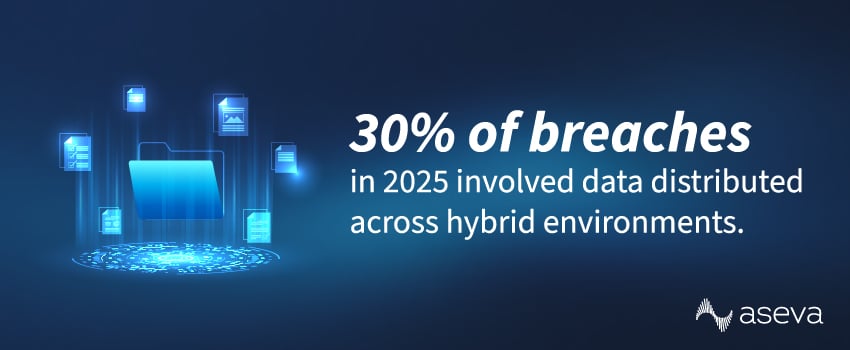
The challenge is that modern networks span on-prem and cloud environments, and managing security across these different spaces can be overwhelming. In fact, 30% of breaches in 2025 have involved data distributed across hybrid environments.2 Network security management unifies tools like firewalls, endpoint protection, and more into a single framework to improve visibility across your systems and strengthen cyber resilience.
How Does Network Management Security Work?
Network security management works by bringing security controls, monitoring, and response activities into one coordinated framework. Instead of treating firewalls, access controls, endpoint protection, and cloud security as separate efforts, it connects them so your team can manage risk more consistently across the entire environment.
Centralize Monitoring
A core part of network security management is visibility. Security teams need a centralized way to monitor network traffic, systems, user activity, and cloud resources from one place. This makes it easier to detect unusual behavior early, investigate issues faster, and understand how activity in one part of the environment may relate to events elsewhere.
Policy Configuration
Network security management also depends on clearly defined policies that control access, permissions, and traffic flow. These rules should be applied consistently across the environment to reduce the risk of misconfigurations, unnecessary exceptions, and gaps in protection. As networks grow more distributed, consistent policy enforcement becomes even more important.
Threat Detection & Response
Modern security management platforms continuously analyze activity for suspicious behavior, known attack patterns, and policy violations. When an issue is detected, they can trigger alerts or automated response actions such as blocking traffic, isolating devices, or escalating the issue for investigation. This helps reduce response time and limit the impact of threats before they spread further.
Reporting & Compliance
Network security management also helps businesses maintain the records and visibility needed for compliance. Centralized logs, reports, and audit trails make it easier to demonstrate that controls are in place, review security events, and support audits or investigations when needed. This is especially important for organizations that operate under standards or regulations such as HIPAA, PCI DSS, or ISO 27001.
Connect Security Operations Into One Strategy
At its core, network security management is about coordination. It helps businesses bring together security tools, policies, monitoring, and operational processes into a more unified system. That makes protection more proactive, reduces blind spots, and gives teams a stronger foundation for securing both on-prem and cloud environments.
At Aseva, we help businesses integrate these components into a fully-managed environment that makes protection and compliance simple.
How to Build a Network Security Management Plan
A strong network security management plan gives your team a clear way to reduce risk, maintain visibility, and respond consistently as your environment changes. In practice, that means defining what you need to protect, where your biggest exposures are, and how security controls will be managed across on-prem, cloud, remote, and hybrid environments. Frameworks such as the NIST Cybersecurity Framework emphasize that effective cybersecurity programs should cover governance, identification of assets and risks, protection, detection, response, and recovery, rather than focusing on individual tools in isolation.
Start With a Clear View of Your Environment
Before you can manage network security effectively, you need to understand what your environment actually includes. That means documenting sites, cloud platforms, business-critical applications, users, endpoints, remote access paths, third-party connections, and the security tools already in place. This baseline helps you identify blind spots, overlapping controls, and systems that may be underprotected or unmanaged.
For many organizations, this step also reveals how much the network has changed over time. New cloud services, remote work patterns, and ad hoc access decisions can quietly expand the attack surface. Building your plan around a current view of the environment makes every later decision more useful, from policy design to incident response.
Define Priorities, Roles & Security Policies
A plan works best when it is tied to business priorities instead of treating every system the same way. Critical systems, sensitive data, customer-facing applications, and regulated workloads usually need stronger controls and closer oversight than lower-risk assets. Once those priorities are clear, your team can define policies that govern access, segmentation, monitoring, alert handling, configuration changes, and escalation paths.
Ownership matters just as much as policy. Someone needs to be responsible for maintaining rules, reviewing exceptions, approving changes, and following up on incidents. Without that structure, even well-designed controls tend to drift over time.
Build for Continuous Monitoring & Response
Network security management is not a one-time setup. It depends on continuous monitoring, regular review, and the ability to respond when conditions change. CISA’s guidance around continuous diagnostics and vulnerability scanning reflects this principle: organizations need ongoing visibility into assets, users, privileges, and exposed weaknesses, especially for internet-accessible systems.
That is why a practical plan should define how logs will be collected, what activity will trigger alerts, how incidents will be triaged, and when automated actions are appropriate. The goal is not just to detect threats, but to create a repeatable operating model that supports faster decisions and more consistent protection.
Review & Adjust the Plan Regularly
Your network security management plan should evolve along with your environment. New applications, infrastructure changes, mergers, remote access needs, and compliance requirements can all change your risk profile. Regular reviews help you confirm that your policies still fit the business, that controls are operating as expected, and that gaps are identified before they turn into incidents.
This is also where a managed security partner can add value. Aseva helps businesses create more structured, sustainable security programs by bringing together visibility, policy consistency, cloud oversight, and expert operational support in one managed environment.
6 Reasons Why Network Security Management Is Essential
A lack of oversight can create real problems, from delays in incident response to inconsistent configurations that open the door to attackers. Here’s how network security management helps you fix that:
1. Easier Management
When all of your tools are connected, it takes less time to make updates, track issues, or respond to alerts. You don’t have to jump between different systems to see the full picture.
2. Reduced Downtime
Catching issues before they can escalate means fewer outages, faster recovery, and better network performance overall.
3. Faster Threat Response
Automated detection and response can shut down network security threats within minutes to limit how far an attacker can move across your environment.
4. Consistent Policy Enforcement
Uniform policies reduce misconfiguration risks and help maintain compliance across distributed networks.
5. Cost Efficiency
Preventive management lowers the total cost of ownership by reducing the need for manual intervention and unplanned remediation.
6. Scalable Security
Managed network security adapts as your business expands, whether you operate from five sites or fifty.
Common Network Security Management Challenges
The value of network security management is clear, but running it well is not always simple. As networks become more distributed, security teams have to manage more users, more devices, more cloud services, and more policy decisions without losing visibility or consistency. The result is that many organizations are not struggling because they lack security tools. They are struggling because those tools are difficult to coordinate across a fast-changing environment.
Visibility Gaps Across Hybrid Environments
One of the biggest challenges is maintaining complete visibility across on-prem infrastructure, cloud workloads, SaaS applications, and remote connections. As environments become more hybrid, security data often ends up split across separate consoles and platforms. That makes it harder to correlate events, spot patterns, and understand whether isolated alerts are actually part of a larger issue.
This is where centralized oversight becomes especially important. When monitoring is fragmented, response tends to slow down and policy enforcement becomes less consistent.
Policy Drift & Configuration Inconsistency
Network security policies rarely stay static. New applications are deployed, users change roles, vendors need temporary access, and exceptions start to accumulate. Over time, those changes can lead to policy drift, where the intended security standard and the live environment no longer match.
That gap creates risk even when the right tools are technically in place. A firewall rule that was once justified may no longer be necessary. An access permission granted for speed may remain long after the original need is gone. Good network security management is not only about setting rules. It is about reviewing and maintaining them as the environment evolves.
Too Many Alerts, Not Enough Context
Modern security tools generate large volumes of telemetry, but not every alert deserves the same response. Teams often struggle with alert fatigue, especially when they lack the context needed to determine which signals matter most. A high volume of unprioritized alerts can delay investigations, overwhelm internal teams, and increase the chances that serious issues are missed.
That is why effective management depends on more than detection. It also requires correlation, prioritization, and clear response workflows that reduce noise and help teams focus on what actually poses risk.
Balancing Stronger Security With Day-to-Day Operations
Security decisions affect how people work. Access controls, segmentation, traffic inspection, and policy enforcement all need to support the business without creating unnecessary friction. If controls are too loose, risk rises. If they are too rigid, users look for workarounds that weaken the environment in other ways.
The best network security management strategies account for both sides. They protect the network while still supporting productivity, performance, and change across the organization.
Keeping Pace With Modern Access Models
Traditional perimeter-based security is no longer enough for organizations with remote users, cloud applications, and distributed infrastructure. Current guidance increasingly emphasizes Zero Trust principles such as continuous verification, least-privilege access, segmentation, and stronger control over who and what can connect to business resources.
For many businesses, the challenge is not whether these principles make sense. It is how to apply them across existing infrastructure without creating operational complexity. That is one reason managed network security support can be so valuable: it helps translate best practices into a more practical, maintainable program.
What Should Network Security Management Include?
A solid network security and management program needs to cover multiple layers of defense, including:
Firewalls
Firewalls are your organization’s first line of defense against network threats, but they need constant care and attention. Rules that worked last year might not match your current security needs, and keeping everything current is an ongoing job.
Aseva can help you find a trusted firewall management provider to handle policy tuning, threat detection, and performance monitoring, so your teams can tackle more strategic priorities instead of getting bogged down in day-to-day maintenance.
Identity and Access Management (IAM)
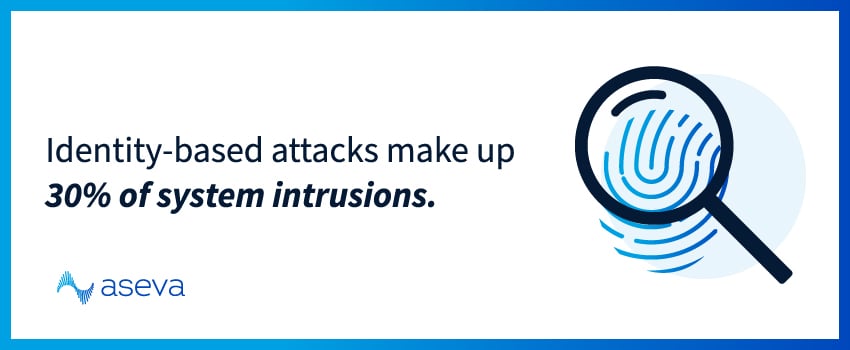
IBM’s 2025 Threat Intelligence Index found that identity-based attacks make up 30% of total system intrusions.3 IAM systems authenticate users and enforce least-privilege principles, which means people can only access the specific data and systems they need to do their jobs. This helps prevent attackers from accessing your company’s sensitive data and reduces the damage if an account is compromised.
Endpoint Security
Endpoints like employee laptops and mobile devices are common entry points for attackers because they're often less protected than your main network infrastructure. Integrating endpoint protection into your network security management strategy allows real-time policy enforcement and rapid response whenever a device is compromised.
Intrusion Detection and Prevention (IDPS)
IDPS tools analyze traffic patterns to identify malicious activity moving through your network. Centralized management lets these systems automatically block attacks, report incidents to your team, and update threat intelligence across your entire network as new threats emerge.
Cloud Security
Visibility often decreases as workloads move to the cloud. Managed cloud security ensures consistent protection across your environment, giving you greater control over SaaS apps, workloads, and remote connections.
At Aseva, we offer Cloud Security Posture Management (CSPM) to give you the tools, insights, and expertise needed to close security gaps and enforce compliance across your assets in the cloud.
Network Segmentation
Network segmentation divides your network into separate sections, each of which has its own security policies and access controls. When you segment your network properly, an attacker who gains access to one part of your system can't move freely to other critical areas.
Traffic Analysis
Monitoring traffic between your network segments and systems can help your security teams detect unusual data flows or policy violations early. Traffic analysis tools work continuously in the background, learning what normal looks like for your business and alerting your team when something deviates from that baseline.

Risk Assessment, Vulnerability Reviews & Policy Audits
Improving network security management starts with understanding where your real risks are. That requires more than occasional reviews or broad assumptions about what is secure. It calls for a structured process to assess risk, identify vulnerabilities, and verify that policies are still working the way they should. NIST guidance treats risk assessment as an ongoing process that supports risk-based decisions over time, not a one-time exercise.
Risk Assessments Help You Prioritize What Matters Most
Every environment contains more potential issues than a team can fix at once. Risk assessments help you sort those issues by likelihood, impact, and business importance so resources are applied where they matter most. That includes evaluating critical assets, attack paths, user privileges, external exposures, and the possible business impact of compromise or downtime.
This approach makes network security management more strategic. Instead of reacting equally to every concern, your team can focus on the systems and weaknesses that create the greatest operational or compliance risk.
Vulnerability Reviews Should Be Continuous, Not Occasional
Vulnerability reviews help uncover exposed services, outdated software, weak configurations, and other conditions that attackers may exploit. CISA’s cyber hygiene guidance emphasizes continuous vulnerability scanning for internet-accessible assets because external exposure can change quickly and often without obvious warning.
That same principle applies more broadly across your environment. Reviews should not be limited to annual audits or major projects. Regular scanning and follow-up help security teams catch issues earlier, shorten remediation timelines, and reduce the chance that known weaknesses remain unaddressed.
Policy Audits Keep Controls Aligned With Reality
Policies are only effective when they reflect the environment they are supposed to govern. Over time, firewall rules, access rights, segmentation decisions, and cloud guardrails can become outdated or overly permissive. Policy audits help confirm that controls still match current business needs, that exceptions are justified, and that changes have not introduced unnecessary risk.
These reviews are also important for compliance. Logging, monitoring, and audit evidence are central to many regulatory and security frameworks because they show whether controls are operating consistently and whether incidents can be investigated effectively.
Use Findings to Improve, Not Just Report
The purpose of assessments and audits is not to create paperwork. It is to strengthen the security program. Findings should feed directly into remediation priorities, policy updates, incident readiness improvements, and better long-term governance. When this process is repeatable, businesses gain more than a cleaner audit trail. They gain a clearer understanding of where security is strong, where it is drifting, and where action is needed next.
That kind of continuous improvement is essential for modern network security management, especially in hybrid environments where assets, users, and risks are constantly changing.
How To Improve Network Security and Management
Improving network security management is not about adding more tools for the sake of it. It is about creating a more unified, consistent, and proactive approach to protecting your environment. As networks grow more complex, businesses need stronger visibility, better coordination, and a clearer process for managing risk across both on-prem and cloud systems.
Centralize Security Oversight
Bringing your security tools and the data they generate into one management layer helps eliminate blind spots and gives your team a clearer view of what is happening across the environment. When suspicious activity appears in more than one system, centralized oversight makes it easier to connect the dots and respond with more confidence.
Automate Routine Security Tasks
Automation helps reduce manual workload and improves consistency across day-to-day operations. Tasks like configuration updates, compliance checks, alert triage, and initial response actions can often be handled faster and more accurately through automation, allowing your team to focus on higher-value security decisions.
Review & Optimize Regularly
Even small changes to your infrastructure, user access, or application stack can introduce new vulnerabilities. Regular reviews of security policies, access controls, device configurations, and alerting workflows help ensure your environment stays aligned with current risks and business needs.
Unify Cloud & On-Prem Protection
Your network security management strategy should cover assets wherever they live, whether in a data center, a remote office, or a cloud platform. Treating cloud and on-prem security as separate efforts often leads to inconsistent policies and weaker visibility. A more unified approach helps maintain stronger protection across the full environment.
Work With the Right Security Partner
Not every business has the in-house time or expertise to manage every layer of network security effectively. Working with a managed security provider like Aseva gives you access to specialists who can help monitor, maintain, and strengthen your environment over time. The result is a more resilient security program that supports your business without adding unnecessary operational strain.
Strengthen Your Network Security With Aseva
Effective network security management isn't just about having the right technology in place. It's about strategy, consistency, and proper execution. With the right framework in place, your team can focus less on firefighting and more on building a resilient foundation.
At Aseva, we specialize in delivering integrated, expert-driven cybersecurity solutions that align with your actual business goals. Whether you’re managing hybrid cloud environments or distributed enterprise networks, we’re here to provide the tools and support you need to improve network security at every level. Get started today.
Network Security Management FAQs
What is network security policy management?
Network security policy management is how you define, standardize, deploy, and continuously maintain the rules that control access and traffic across your environment, like firewall rules, segmentation policies, IAM/least-privilege controls, and cloud security guardrails. The goal is consistency: the same intent enforced everywhere, with clear ownership, change control, and auditability.
Why does policy management matter more in large enterprises?
Because scale multiplies risk. More sites, more cloud services, more admins, and more rule changes mean misconfigurations and exceptions become inevitable without a formal process. Strong policy management reduces “drift” and helps you enforce least privilege consistently across teams and systems.
Why is centralized monitoring so important for enterprise network security?
Centralized monitoring gives your team one place to see what is happening across on-prem and cloud, so you can spot anomalies, correlate related events, and respond faster. This aligns with the idea of continuous monitoring: maintaining ongoing awareness of security, vulnerabilities, and threats to support risk decisions.
How do network security management platforms help with compliance?
The biggest compliance win is evidence. Centralized logging, immutable audit trails, and consistent reporting make it easier to prove that controls are working and to investigate incidents. Many standards and regulations explicitly expect audit controls and log review, including HIPAA’s audit controls and PCI’s logging and monitoring expectations.
What benefits do managed network security services typically provide?
Managed services reduce day-to-day load by handling continuous monitoring, alert triage, policy tuning, and operational upkeep, while helping keep configurations consistent across a growing environment. In practice, that usually means fewer blind spots, faster response, and smoother audits because logging and monitoring are run as an ongoing program rather than a once-a-year scramble.
How should an enterprise choose a network security management solution?
Start with your reality: hybrid footprint, number of locations, compliance requirements, and the tools you already run. Then look for strong coverage across on-prem and cloud telemetry, centralized policy workflows, SIEM-grade correlation, automation where it is safe, and reporting that maps cleanly to your audit needs.
Which AI is best for network security management?
There isn’t one “best” AI. The better question is whether the AI is grounded in your security data, supports investigations and response with human control, and fits your platform stack. Examples include copilots embedded in major security ecosystems (for example Microsoft Security Copilot and Gemini in Google Security Operations), but the right choice depends on where your telemetry and workflows already live.
Sources: