Networks generate more data than any team of humans can realistically analyze in real time – traffic patterns, latency spikes, device health, security events, and capacity trends, all shifting by the minute. AI network optimization exists to make sense of that data at machine speed, catching problems and opportunities that traditional monitoring tools miss entirely.
More than half of enterprises now recognize this necessity, with 54% of enterprises adopting AI-powered monitoring solutions in 2025.¹ Read on to learn what AI network optimization is, how it works, and what kind of results your business can expect from adopting it.
What Is AI Network Optimization?
AI network optimization uses artificial intelligence and machine learning to continuously monitor and analyze network performance, predict problems before they happen, and automatically adjust configurations to keep the network running at peak efficiency.
Modern networks are too dynamic for traditional approaches to keep up. Traffic patterns change with business demand, cloud workloads scale unpredictably, and hybrid environments span data centers, branch offices, and remote users. AI network optimization gives IT teams a way to manage that complexity without needing to manually monitor every metric across every device.
However, it’s worth noting that AI network optimization isn't a single product you buy off the shelf. It shows up across several layers of network management – from SD-WAN platforms that use AI to select optimal paths to fully automated AIOps platforms and beyond. Knowing where AI fits into your environment is the first step toward using it effectively.
How Does AI-Powered Network Optimization Work?
AI-powered network optimization depends oh a few connected capabilities working together:
Continuous Data Collection
The process starts with telemetry – data pulled from routers, switches, firewalls, wireless access points, and cloud gateways. This includes bandwidth utilization, latency, packet loss, error rates, and device health metrics, collected continuously rather than through periodic snapshots.
Predictive Analytics
Rather than waiting for a threshold breach to trigger an alert, predictive models analyze data to identify the early signs of degradation, like a slow rise in latency or a pattern that usually precedes a failure. This early detection gives your team time to act before users are impacted.
Automated Remediation
Many AI network optimization platforms can act automatically after detecting a developing problem: rerouting traffic away from a congested path, adjusting quality-of-service policies, or flagging a device for proactive replacement. This reduces the time between detection and resolution from hours to seconds in many cases.
Traffic and Capacity Optimization
AI models also continuously analyze traffic flows to recommend or automatically implement more efficient routing, load balancing, and capacity allocation – ensuring that bandwidth and compute resources are used where they'll have the most impact.
What’s the Role of AI in Network Optimization?
The role of AI in network optimization is fundamentally about scale and speed. Human network engineers are excellent at diagnosing complex problems, but they can't watch every metric on every device around the clock – and they can't process the volume of telemetry that a modern network generates.
AI fills that gap, handling the continuous monitoring and pattern recognition that would otherwise overwhelm a team, while surfacing the insights and decisions that still benefit from human judgment.
AI doesn't replace network engineers; it changes what they spend their time on. AI removes the burden of manually sifting through logs and dashboards, so engineers can focus on more strategic decisions like:
- Capacity planning
- Architecture changes
- Responding to the issues AI has flagged and prioritized
That shift matters most for lean IT teams, where a handful of people are expected to manage infrastructure that used to require a much larger staff.
Benefits of Network Optimization Using AI
Organizations that adopt network optimization using AI typically see benefits like:
Faster Issue Detection and Resolution
Problems are identified and often resolved before users notice any impact. Early detection means you're addressing issues during the planning and investigation phase rather than during the crisis response phase.
Lower Operational Burden
Automated remediation reduces the volume of manual tickets and interventions your IT team has to handle. This is especially valuable in environments where network operations teams are already stretched thin managing multiple technologies and platforms.
Reduced Downtime
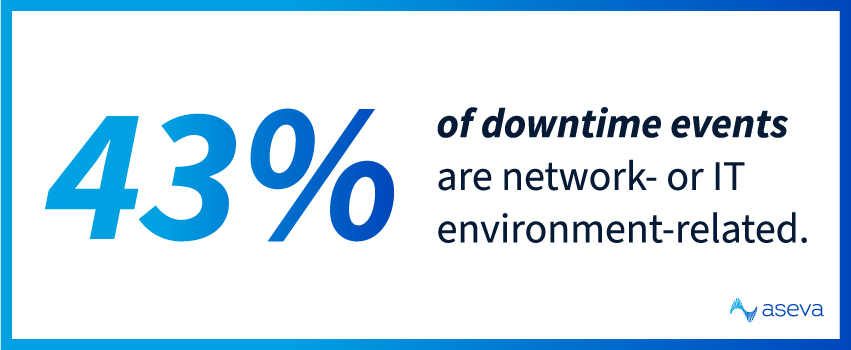
Splunk’s The Hidden Costs of Downtime 2026 report found that 43% of downtime events are network- or IT environment-related.2 Predictive analytics can catch failing network hardware and degrading links before they cause outages, preventing downtime so that users can work, customers can access your services, and revenue keeps flowing.
Better Resource Utilization
AI-driven traffic optimization ensures bandwidth and infrastructure investments are used efficiently. You're not paying for capacity that sits unused while other paths are congested. The network adapts to where traffic is now, not where it was last month.
Improved User Experience
Consistent performance for the applications your business depends on, even as demand fluctuates. Employees connecting from branch offices get reliable access to cloud applications. Customers experience fast response times regardless of where they're connecting from.
Increased Network Intelligence
AI systems learn continuously. Over time, they understand your specific network, including the patterns that precede problems, the optimization opportunities unique to your environment, and the relationships between different infrastructure components, deeply. That institutional knowledge compounds as the system matures.
Put AI to Work on Your Network With Aseva
AI network optimization isn't about replacing your team – it's about giving them the visibility and speed to manage a network that's grown too complex for manual oversight. The right implementation depends on your environment, your existing tools, and how much automation makes sense for your business today.
At Aseva, we take a vendor-agnostic approach to network optimization. We’ll help you evaluate AI-driven network management capabilities across the platforms we work with – rather than pushing a single vendor's AI feature set. Our network design and observability services are built to give your team the visibility and automation that make AI optimization genuinely useful, backed by our own certified engineers and network expertise.
Talk with one of our network experts to see what AI-powered optimization could look like for your business.
Sources: